Burst pipe right now? Turn off the stopcock first — then contact us.
Emergency plumber — London
Burst pipe in London?
Emergency plumbers covering all 33 London boroughs. Same-day burst pipe repair — from frozen and split pipes to corroded Victorian pipework failures. Turn off your stopcock now and contact us.
Burst pipe right now — do this immediately:
Turn off the main stopcock — usually under the kitchen sink. Turn clockwise to close.
Open all taps to drain water from the pipes and reduce pressure on the burst.
Turn off the boiler and central heating system.
If water is near electrical fittings or sockets, turn off electricity at the consumer unit.
Use towels and buckets to collect water and limit damage to floors and ceilings.
Photograph all damage — you will need this for an insurance claim.
About this service
Burst pipe emergency London: what you need to know
What to do in the first five minutes
When a pipe bursts, every minute counts. Water flowing unchecked through a London property can cause structural damage, destroy flooring, ruin plaster ceilings and create an electrocution risk if it reaches a consumer unit. The single most important action is locating and closing your main stopcock — a quarter-turn valve that shuts off water to the entire property.
In most London houses the internal stopcock sits under the kitchen sink, close to where the supply pipe enters through the floor or external wall. In purpose-built flats — which make up a large share of London's housing stock — it may be inside an airing cupboard, under a bathroom vanity unit, or in a communal riser cupboard on the landing. If you cannot find it, the external stopcock is typically beneath a small square cover in the pavement directly outside your front door, operated with a long-handled key. Once the stopcock is closed, open every tap in the building to drain residual water from the pipework and reduce pressure on the burst section.
If water is pooling near electrical sockets, ceiling rose fittings or a consumer unit, turn off the electricity at the main breaker before touching anything. Water and live circuits are a lethal combination. Once power is off and the water supply is isolated, photograph all visible damage from multiple angles — these images are essential for any insurance claim and our engineer can reference them when compiling a written report.
Why London properties are especially vulnerable to burst pipes
London has a higher rate of burst pipe incidents than most UK cities, and there are specific structural reasons for this. A large proportion of London's housing was built in the Victorian and Edwardian eras — between roughly 1840 and 1914. These properties were plumbed with lead or cast-iron supply pipes that were never designed to last 150 years. Internal corrosion narrows the bore over time and eventually causes a sudden failure, often at a joint or elbow.
London also sits on a thick bed of London Clay — a geological formation that shrinks in dry summers and swells in wet winters. This seasonal movement puts lateral stress on buried and under-floor pipework, gradually loosening compression fittings and cracking older plastic pipes. During cold snaps, loft-run supply pipes in Victorian terraces are particularly exposed: they were often installed on the cold side of the insulation, or where insulation has degraded over decades. Our Gas Safe registered engineers attend burst pipe emergencies across all 33 London boroughs every day, and the pattern of failures we see is consistent with these underlying factors.
Types of burst pipe repair and what to expect
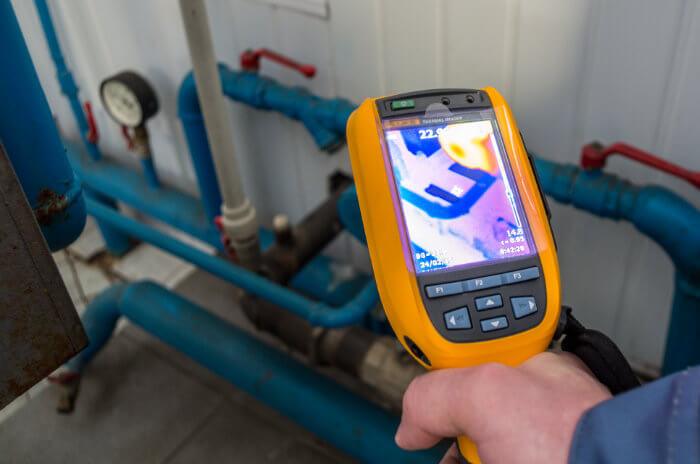
Not every burst pipe requires extensive work. Our engineer's first job is to locate the exact point of failure — sometimes obvious from a visible split, sometimes requiring pressure testing or thermal imaging for a concealed pipe run. Once located, the repair method depends on the pipe material, the severity of the break, and whether the pipe is accessible.
For copper pipework — the standard in most London properties built between 1950 and 1990 — a clean split can be repaired using a compression coupler or a solder end-feed fitting. Where the pipe has corroded along a longer run, we recommend replacing the affected section entirely rather than patching it, since a corroded pipe tends to fail again within months. Modern plastic push-fit repair couplers are used for emergency repairs on plastic pipe, providing a watertight seal without soldering. For inaccessible pipes — concealed behind tiles, under concrete floors, or within a stud wall — we assess whether trace-and-access work is needed and advise on the most cost-effective approach before any cutting begins. Pricing for burst pipe repairs is confirmed before we start work, typically in the range of £150–£400 depending on complexity and access.
Transparent pricing
£150–£400 for burst pipe repairs
Price confirmed before work starts. No hidden call-out charges. Written quote provided on arrival.
Insurance claims and engineer reports
Most standard buildings insurance policies cover damage caused by an escape of water — which includes burst pipes. The insurer will want evidence: the date and time of discovery, photographs of the damage, and confirmation of what caused the leak. Our engineer can provide a written report detailing the cause of failure, the repair carried out, and any further remedial work required, giving your insurer everything they need to process a claim.
Document the damage yourself before calling us if it is safe to do so. Photograph the burst pipe, any water staining, damaged belongings and structural elements. Do not throw away damaged items before the insurer has had the opportunity to assess them, and notify your insurer as soon as the emergency is under control — most policies require prompt notification.
Preventing future burst pipes
Once we have completed the repair, we always advise on steps to reduce the risk of a repeat. The key measures for London properties are: lagging exposed pipes in loft spaces and outbuildings with foam insulation sleeves; keeping your property heated to at least 10°C during cold spells even when you are away; and knowing exactly where your stopcock is before an emergency happens. If your property still has original Victorian lead or iron supply pipes, we can advise on a full re-pipe — a one-off investment that eliminates the risk of corrosion failures for decades. Our engineers, rated across 60 Checkatrade and 120 MyBuilder reviews, can advise on the right solution for your property during the same visit.
Burst pipe types in London
Burst pipes we repair across London
Frozen burst pipe
Water freezes and expands inside the pipe, splitting the barrel. Most common in loft spaces, exposed outside walls, and unheated outbuildings.
Corroded Victorian pipework
Lead and iron pipes in pre-1970 London properties corrode from inside, causing sudden failures. Common in terraced houses and Victorian conversions.
Compression fitting failure
Olive joint or compression fitting loosens under pressure — common after building work disturbs existing pipework.
Plastic push-fit pipe failure
Modern plastic push-fit fittings can pull apart if not seated correctly. Often found in DIY plumbing work or rushed renovations.
Concealed pipe failure
Pipes running under floors or inside walls that have developed a slow split, revealing itself as ceiling collapse or floor damage.
Hot water pipe failure
Heating circuit pipes running under floors or behind panels at elevated pressure — particularly in unvented systems.
180+
Verified reviews
60 Checkatrade · 120 MyBuilder
33
London boroughs covered
All areas, same-day attendance
Gas Safe
Registered engineers
All gas and heating work covered
London landlords
Burst pipe in your London rental property?
Landlords must arrange emergency repairs without delay — a burst pipe causing water damage to a tenant's belongings or making the property uninhabitable is a serious liability. We attend landlord burst pipe callouts as a priority and can provide an engineer's report for your insurance claim.
Common questions
Burst pipe London: frequently asked
What do I do if a pipe bursts in my London home?
(1) Turn off the water supply immediately at the main stopcock — usually under the kitchen sink or in the airing cupboard. (2) Turn on all taps to drain the system and relieve pressure. (3) Turn off the boiler and central heating. (4) If water is near electrics, turn off electricity at the consumer unit. (5) Collect water with buckets or towels to limit damage. (6) Call an emergency plumber — we cover all London boroughs.
How quickly can an emergency plumber attend a burst pipe in London?
We aim to attend burst pipe callouts in London within 1–3 hours. Burst pipes are treated as priority emergencies across all 33 London boroughs. Response time depends on engineer availability and location.
Will my home insurance cover a burst pipe in London?
Most buildings insurance policies cover damage caused by a burst pipe under "escape of water." The repair of the burst pipe itself may or may not be covered — check your policy. Trace and access cover (finding the leak) is included in many policies. Always call your insurer to notify them, even if you are not sure you will claim.
Why do pipes burst in London?
The most common causes of burst pipes in London are: frozen pipes during cold weather (water expands when it freezes, splitting the pipe); corrosion in older Victorian pipework; excessive water pressure; physical damage from building work; and fatigue in copper or plastic fittings after many years. London properties built before 1970 frequently have lead or iron pipework prone to corrosion failures.
Gas Safe registered · all 33 London boroughs
Need an emergency plumber now?
Same-day attendance for burst pipe emergencies across London. Price confirmed before any work begins.
Contact us nowRelated services